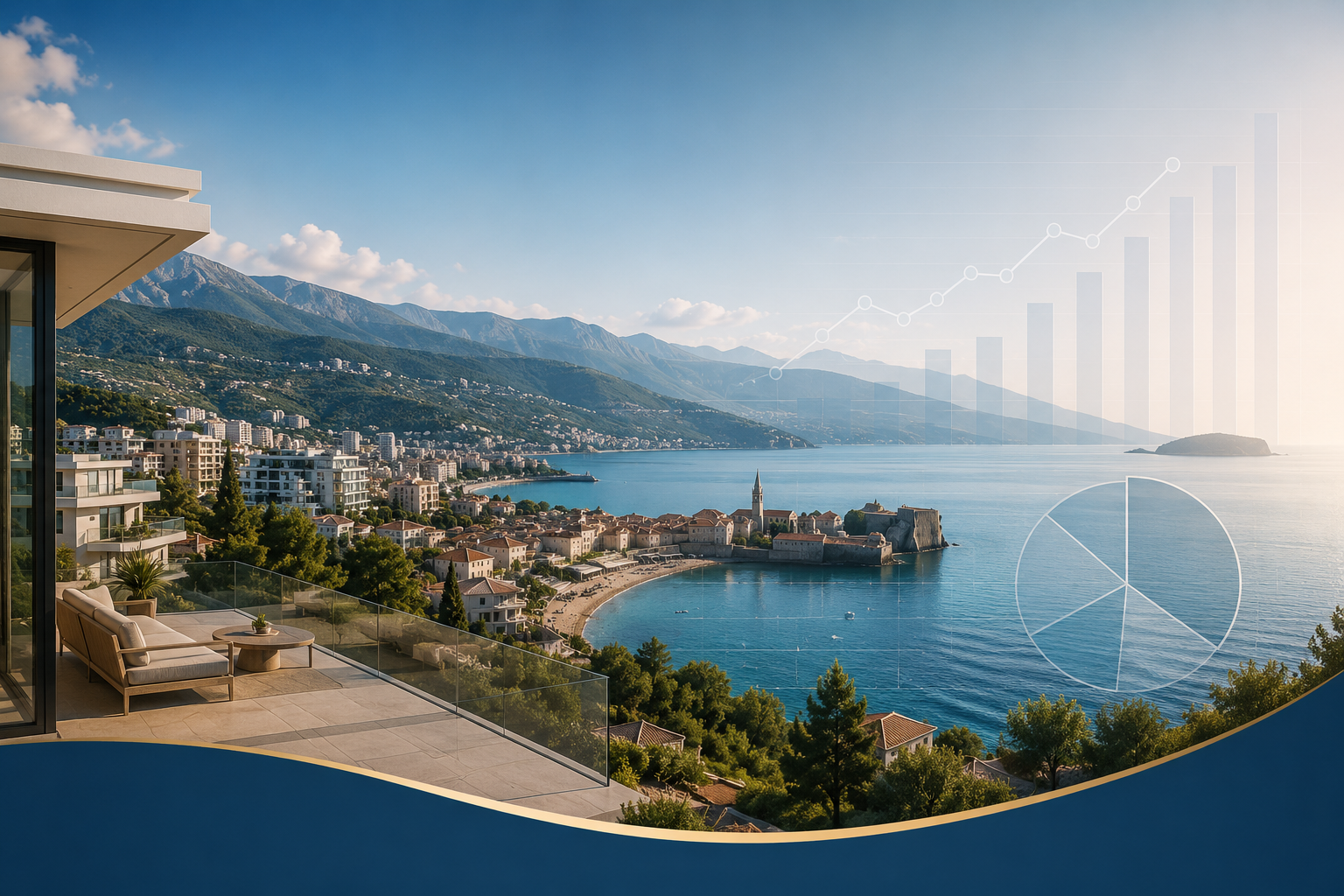
The second quarter of 2026 confirmed what the data has been showing for six months: the Budva property market is no longer volatile — it has entered a mature phase where prices move with the economy rather than with speculation.
Prices by micro-location
Q2 average across all typologies:
- Old town + city centre: €4,250/m² (↑ 3.1% YoY) — structural scarcity keeps pricing
- Bečići and Rafailovići: €3,800/m² (↑ 2.4% YoY) — highest transaction volume
- Lapčići, Markovići, Reževići: €3,100/m² (↑ 5.8% YoY) — strongest growth, buyers want sea views without crowds
- Pržno and Sveti Stefan: €5,900/m² (↑ 1.9% YoY) — premium segment stable
Sales velocity
Median days-to-sale for well-priced units below €350,000 dropped from 142 (Q4 2025) to 89 days in Q2 2026. That is the strongest liquidity Budva has shown since pre-pandemic levels. The premium segment above €600,000 remains slow (median 187 days) — a high entry bar plus a smaller pool of active buyers.
The most in-demand micro-location this quarter
The surprise: Lapčići and the surrounding hillside zone recorded a 28% YoY rise in transaction volume. The trend reflects a maturing market — buyers who would have chased Bečići three years ago are now picking a quieter location 2-3 km from the beach for a 25-30% lower price.
Rental yield
Seasonal (May–September) gross yield on 50-80 m² apartments:
- Budva centre: 7-9% (occupancy 78%)
- Bečići: 8-11% (occupancy 84%)
- Lapčići: 6-8% (occupancy 71%)
Net yield typically sits 4-5 percentage points lower (tax, maintenance, agency commission if you outsource the letting).
Forecast for Q3-Q4
The season looks strong — July/August bookings are already 18% above the same point in 2025. We expect a modest 1-2% price uptick in Q3 driven by lower seasonal supply, then a possible correction in Q4 as new supply hits the market (three larger Bečići projects enter sales in September/October).
Data from the Budva cadastre, regional MLS feeds and Sigma's internal record of 340+ Q2 2026 negotiations.